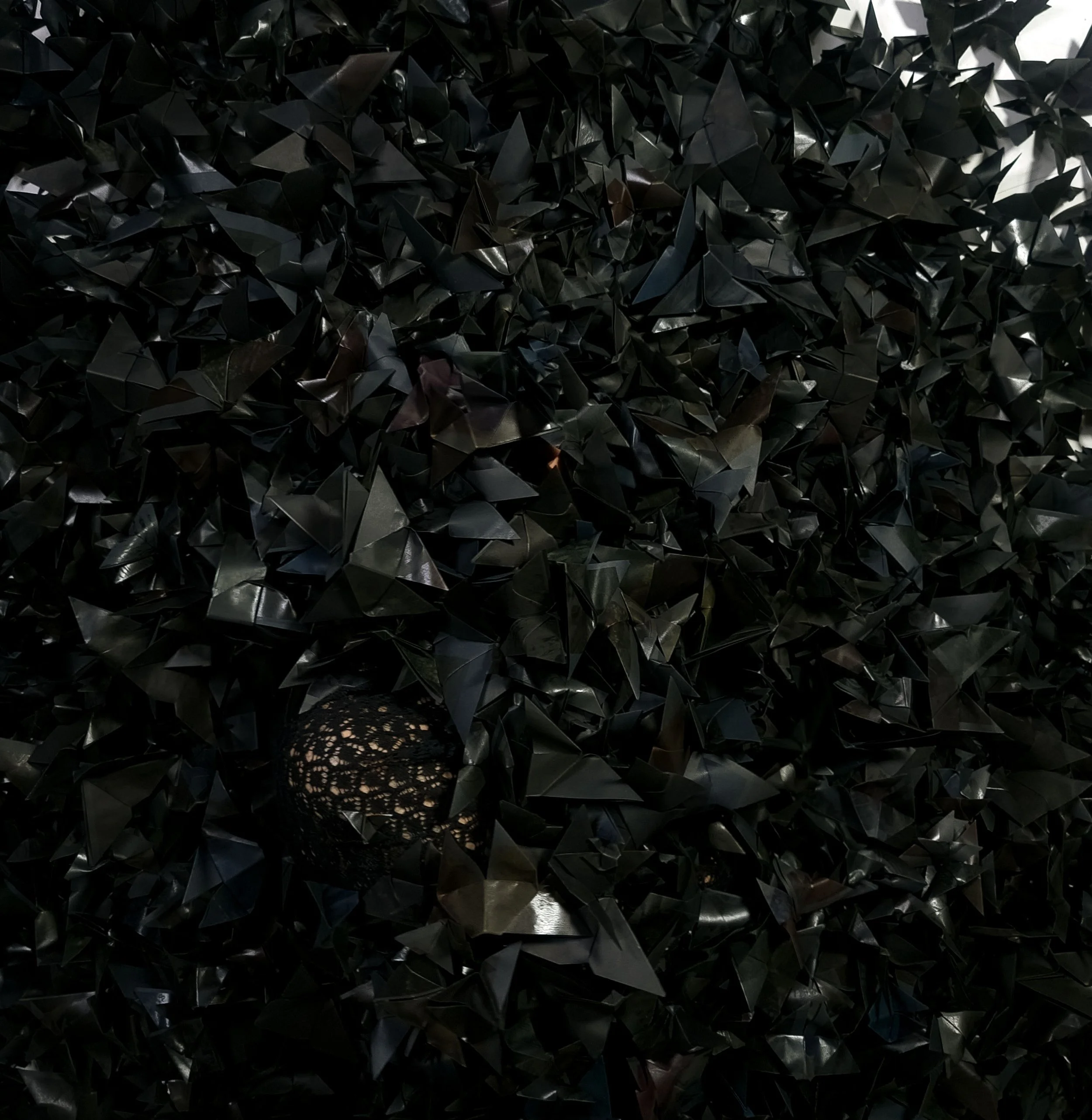
Butterfly Valley
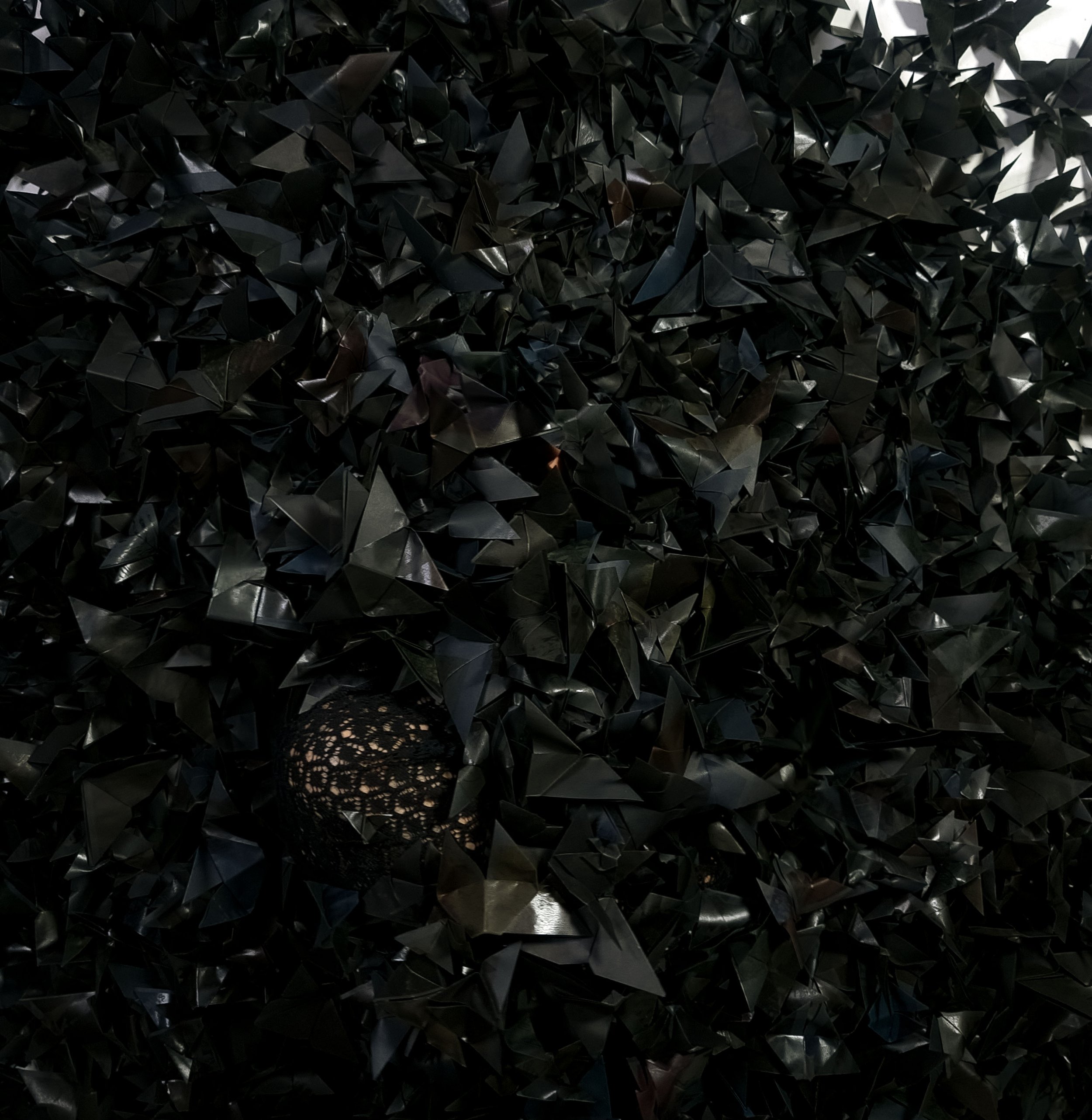
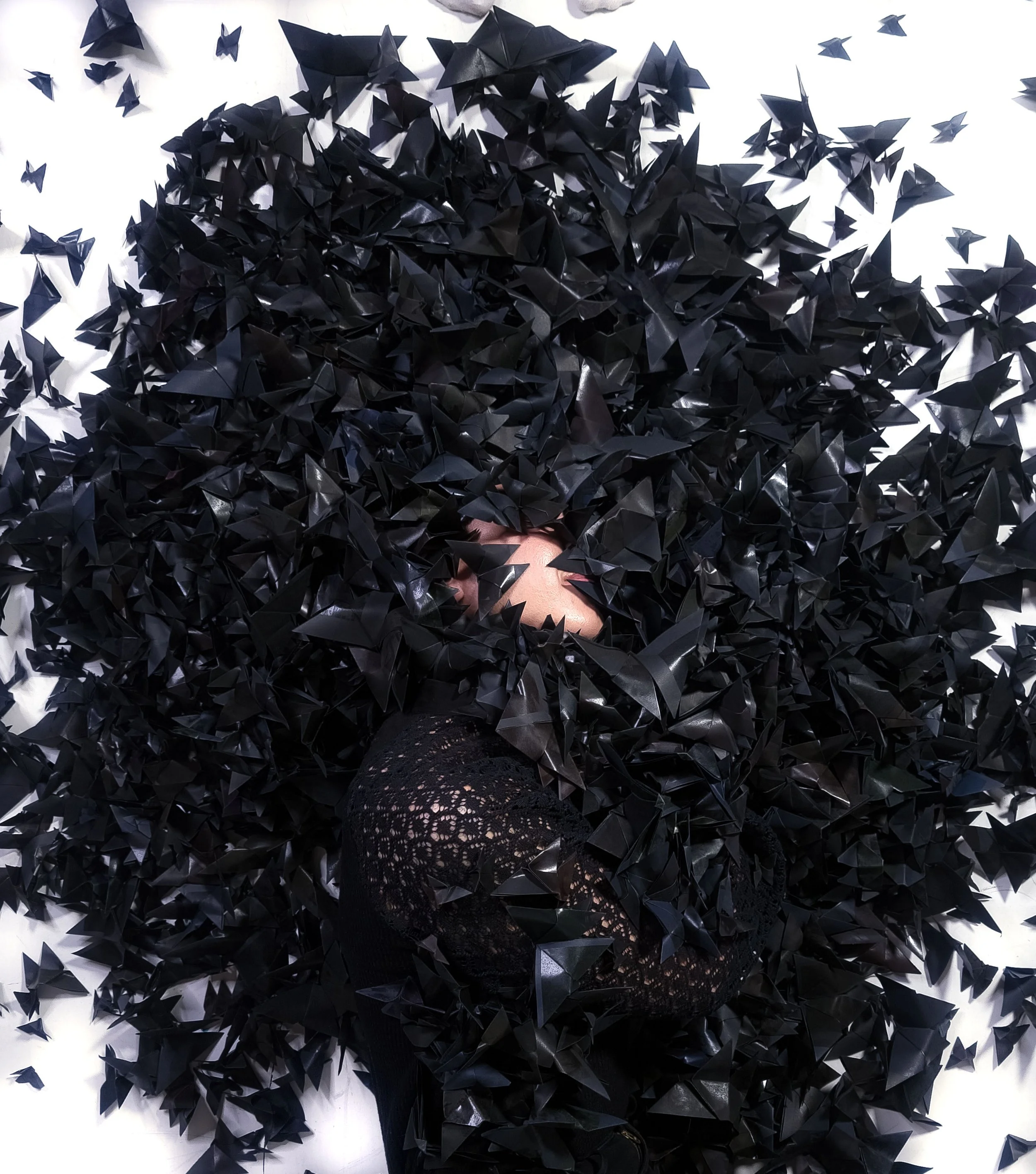
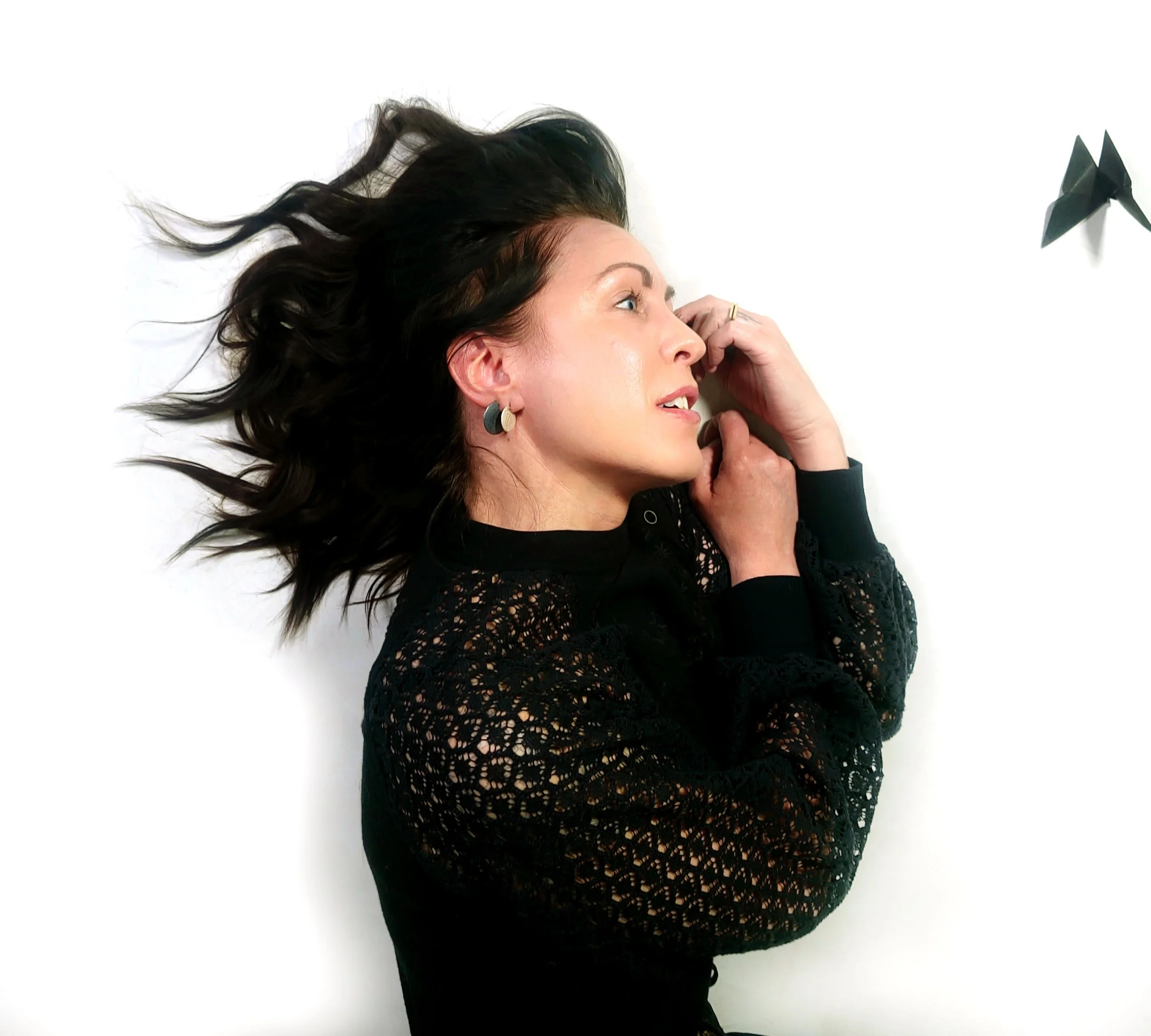
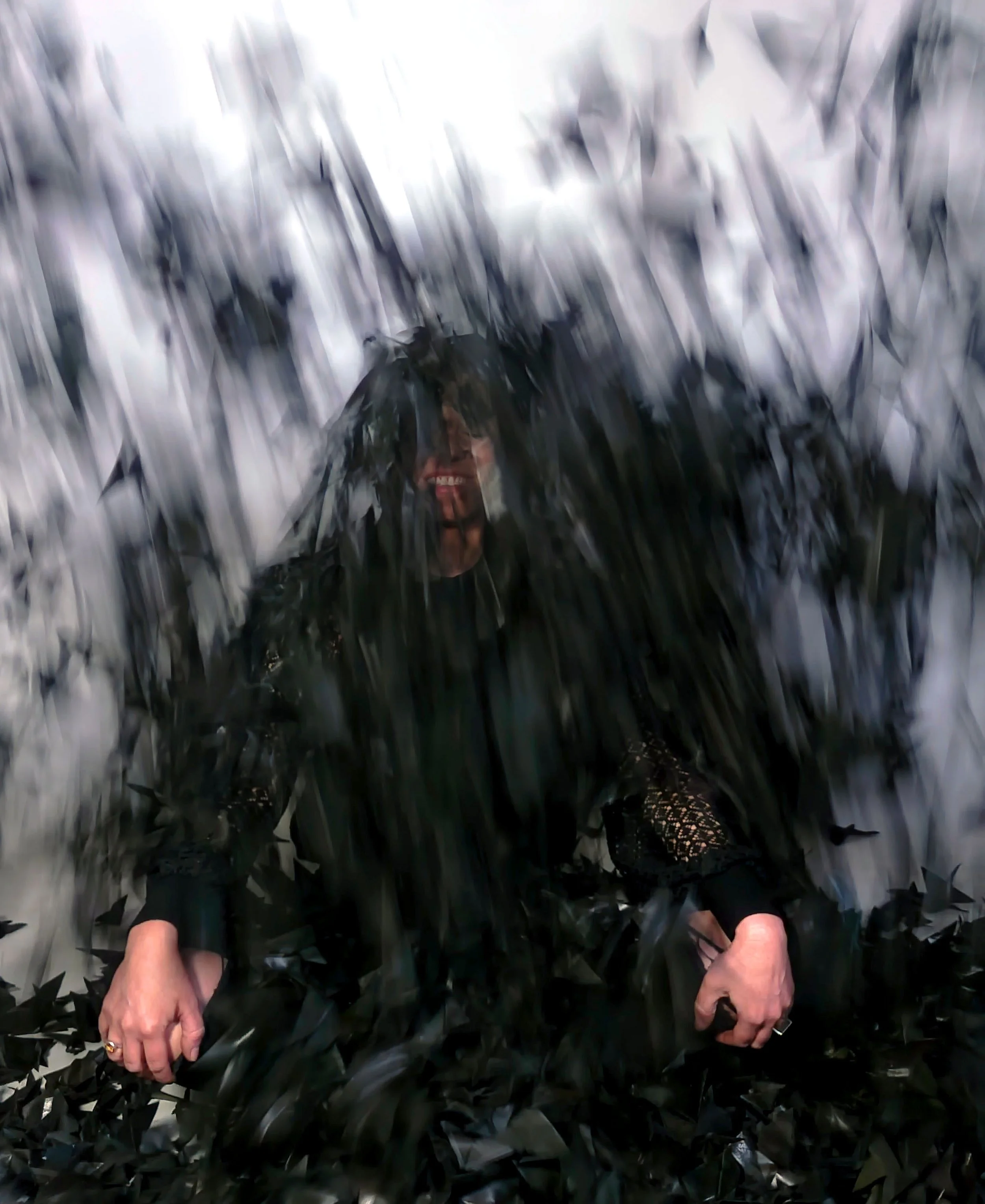
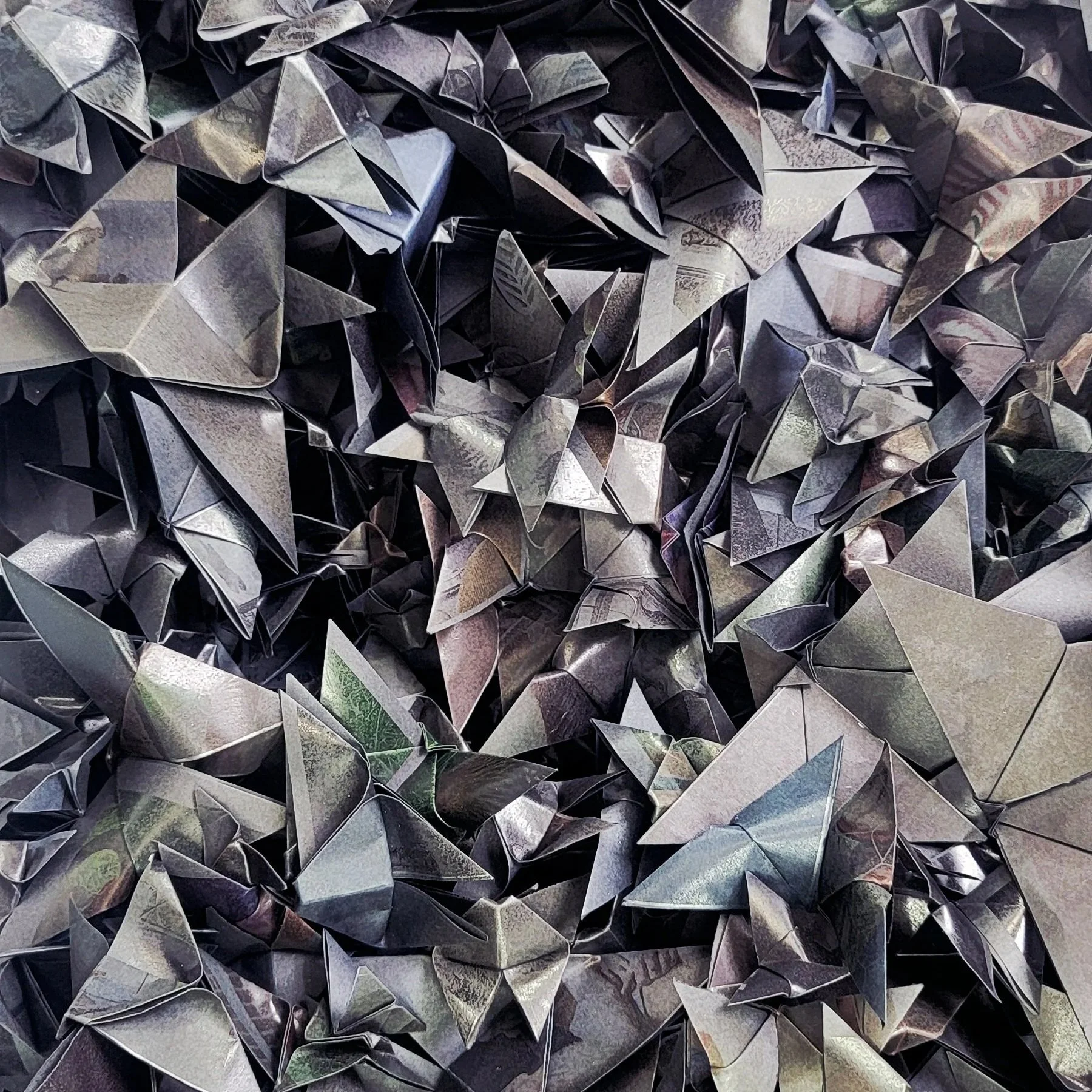
Butterfly Valley is a body of work that considers penance, transformation, and healing through ritualized acts of making. Over the course of four months, fifty-one black origami butterflies were folded each day, marking time through accumulation and loss. The work emerged slowly, shaped by duration, repetition, and the quiet insistence of daily labor, allowing time itself to become both material and measured.
The black butterfly functions as a symbol of metamorphosis shaped by shadow. It is transformation born from difficulty rather than resolution. It signifies becoming after an ending: the dissolution of a relationship, the closing of a life chapter, the shedding of a former self. Like memory, the butterfly is fleeting, suspended between presence and disappearance. Its form holds the tension between fragility and endurance, echoing the impermanence inherent in both paper and lived experience.
Subtly printed onto each sheet of origami paper are photographic fragments, snapshots spanning seventeen years lived within a past relationship marked by deep trauma and lingering guilt. As the paper is folded, these images fracture and partially vanish, mirroring the way memory erodes, resurfaces, and reshapes itself over time. What remains is incomplete, altered, and unresolved.
Through the daily act of folding, repetition became a ritual of penance and healing. The gesture slowed time, drawing the body out of the urgency of everyday life and into a focused, quiet space where explanation, repair, and narrative coherence were no longer required. In this suspended duration, the ritual stood in for words. Intangible guilt and emotional pain were given form through touch, sequence, and care; purposefully rendering the internal visible and measurable.
As the mass of butterflies grew, pain was gradually alleviated by rhythm and intention. Accumulation transformed suffering into something survivable, then purposeful. In their final state, the butterflies shift from vessels of burden into playful, buoyant forms. Their lightness resists the weight of their origins, introducing moments of joy that do not erase trauma but coexist alongside it. This playfulness becomes an act of empowerment. I am reclaiming my pleasure, agency, and imagination after harm. The exhibition ultimately frames joy not as escape, but as a generative force: a quiet, ongoing practice of healing and self-reclamation unfolding across time.
Quisque iaculis facilisis lacinia. Mauris euismod pellentesque tellus sit amet mollis.